|
Work Time Mon to Fri :8:00-20:00 Sat to Sun :9:00-17:00 Contact Details 手机:0086 139 229 345 98 邮箱:409639645@qq.com |
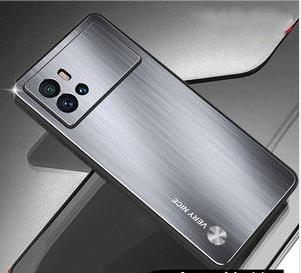
Five Processes of 5G Mobile Phone Plastic Back CoverWith the advent of the 5G era, plastic shells have successfully replaced metal shells. In the future, high-end and flagship models will be dominated by glass and ceramic cover plates, while low-end models will be dominated by plastic shells. At present, plastic shell is mainly divided into five kinds of process technologies: ordinary injection molding, composite sheet (PC, PMMA) stamping molding, in-mold insert injection molding (IML) technology, in-mold decoration (IMT) technology and transparent PC imitation glass injection molding.
1. LDS technology The principle of LDS technology is that the metal particles of the plastic shell containing gold metal are excited by laser, and the copper foil is exposed on the plastic by environmental protection electroplating technology. The copper foil can be used in three-dimensional space and directly turn the mobile phone shell into an antenna to receive signals. LDS antenna technology provides flexible and complex three-dimensional design, which has surpassed the application of traditional physical antenna (Flex-Antenna) technology in small volume and mobile devices. Its advantages are: integrating different types of antennas; Uch as Global System for Mobile Communications (GSM), Code Division Multiple Access (CDMA), Router WiFi, Bluetooth, Frequency Modulation Radio (FMRadio). Save space on slim and complex handheld mobile device structures. Reduce the interference of different types of antennas, and reduce the probability of signal degradation caused by direct touching of the antenna by the user. It can be widely used in smart phones, portable computers and tablet computers. Development trend: In the 5G era, the high-end smartphone terminal antenna needs to be placed on the back cover of 3D glass. The curved surface structure of 3D glass is not suitable for the placement of 5G antenna contacts, which is a technical problem at present. Recently, according to the media, BYD has the technical reserve for mass production of 5G antenna on the back cover of 3D glass. Whether LDS antenna is suitable for curved 3D glass needs to continue layout research. 2. IMR technology Principle: The in-mold transfer printing process is a kind of in-mold decoration. It was developed by Nissha Printing in the 1980s. Since 2006, it has cooperated with HP to launch the color shell notebook computer. The IMR process has become the mainstream process for the shell treatment of notebook computers. Advantages: According to the principle of IMR process, the ink is printed on the PE film, and the metal material can also be steamed on the PE film to form a whole roll type for the forming machine plus positioning system. After the printing position of the film is aligned with the position to be printed in the mold cavity, it is formed with the plastic. After forming, the formed product is combined with the ink but separated from the film to continue the forming action of the next mold. The surface of the molded finished product is completely hardened after UV irradiation. Development trend: The most important thing for IMR product development is the successful conditions for coating and transfer printing. The angle, turning radius and draft angle are all limited. Therefore, the products using IMR process before can only make four corners round, called arc machine, without side wall angle at all. 3. IML technology: Principle: The remarkable feature of the in-mold injection molding (IML) technology is that the surface is a layer of hardened transparent film, the middle is a printed pattern layer, and the back is a plastic layer. Because the ink is sandwiched in the middle, the surface of the product can be prevented from being scratched and friction-resistant, and the color can be kept bright for a long time and is not easy to fade. Advantages: 1. Diversification of printing appearance effect: through the combination of transfer printing soft touch and color, electroplating and other printing technologies, to achieve a variety of diversified appearances. Research and development of 2. ultra-thin IML, the thinnest can reach 0.80mm, the deformation is less than 0.5mm; the thickness of local rubber reduction can reach 0.6mm. Development trend: Based on the existing equipment and process flow of IML technology, the IMTa process will be improved and evolved to better meet the needs and technical requirements of future users, thus reactivating the development space of traditional plastic molding. 4. IMT technology: Principle: In-mold decoration (IMT) technology is the integration and extension of in-mold injection molding (IML) technology and in-mold transfer printing (IMR) technology. The technology applies the film and ink separation technology of IMR technology, and takes into account the monomer forming and injection molding manufacturing form of IML technology, and its multi-layer protective film can effectively protect the quality of the main decorative layer. Advantages: The thickness of the product can be as thin as 0.70mm, with stable deformation and no risk of peeling. Through the extension of the process, such as UV spraying, the functional requirements of the product surface, such as fingerprint resistance, wear resistance and glossiness, can be better realized, and the 3D optical texture effect can be realized through the 3D texture printing layer and the magnetron sputtering technology. Development trend: OPPO A79 is already selling well with IMT process. At present, the problem encountered by IMY is that the pass rate still needs to be speeded up. In the 5G era, IMT technology is likely to become extremely popular, and some companies have begun mass production. In the future, IMT technology can be integrated with electronic technology and evolve into IME technology, adding circuit layers and mounting electronic components, giving a variety of visual, tactile and sensory effects. 5、 PC imitation glass injection molding technology: Principle: Injection molding transparent PC back cover, as a product form with lower cost and aging, has better impact strength and wear resistance, and is attracting more and more attention from the traditional plastic industry. It is understood that Tongda, Jierong, Lianmao, Lingyi Zhizhuang, Zhaoyi, Shuobaide, Huicheng, Bourne, Mingzhi Ultra Precision, Jinsheng, Huacai, BYD, Foxconn, Xinwangda, Beijing Dongming, Yahan Optoelectronics and other manufacturers are speeding up the layout of injection molding transparent PC mobile phone back cover. Mitsubishi Chemical, Sabic and other raw material manufacturers are also verifying the special materials for PC injection molding mobile phone back cover. Advantages: PC imitation glass injection molding process is easy to increase and has high efficiency. It can achieve the effect of imitating 2.5D/3D glass shell. It can be decorated by spraying (without coating) and film sticking process. OPPO realme is the experimental work of PC injection imitation 2.5D glass shell.
Development trend: Composite board has been widely used as the back cover of imitation glass mobile phone, but at present, the production capacity is limited, the product is easy to deform, the investment risk is high, and there is no room for process improvement and cost reduction. Imitation glass and ceramics are too expensive and fragile, and large-scale production and yield make them more suitable for low-end models. In the case that the cost of glass and 3D composite board is difficult to reduce in a short time, plastic injection molding mobile phone back cover, as an efficient and low-cost alternative, emerges as the times require and rises rapidly.
Copyright notice: The contents of this site are from the Internet, for demonstration purposes only. If it infringes your rights and interests, please contact us (13922934598), and we will delete it within 24 hours.
Article classification:
Industry Science
|